
Introduction
In today’s busy lifestyle, maintaining a balanced diet can feel overwhelming. Many people struggle with what to eat, when to eat, and how to stay consistent. This is where understanding what are healthy meal plans becomes essential.
Healthy meal plans provide a structured approach to eating that ensures your body gets the right nutrients every day. By following a simple diet plan for daily routine, you can improve your health, boost energy levels, and maintain a sustainable lifestyle without confusion.
What Are Healthy Meal Plans?
Healthy meal plans are structured eating guides that include balanced portions of nutrients such as carbohydrates, proteins, fats, vitamins, and minerals. They are designed to support overall health, weight management, and long-term wellness.
A good meal plan focuses on:
- Nutritional balance
- Portion control
- Consistency in eating habits
- Variety of fresh and whole foods
Understanding what are healthy meal plans helps you make informed food choices instead of relying on random or unhealthy eating habits.
Benefits of Healthy Meal Plans
1. Ensures Balanced Nutrition
Healthy meal plans include all essential nutrients required for your body to function properly.
2. Saves Time and Reduces Stress
Planning meals in advance eliminates daily confusion about what to eat.
3. Supports Weight Management
Structured eating prevents overeating and unhealthy snacking.
4. Improves Energy Levels
Balanced meals provide sustained energy throughout the day.
5. Builds Healthy Eating Habits
Consistency helps turn healthy eating into a long-term lifestyle.
Simple Diet Plan for Daily Routine
Following a simple diet plan for daily routine doesn’t mean strict dieting—it means eating smart and balanced meals throughout the day.
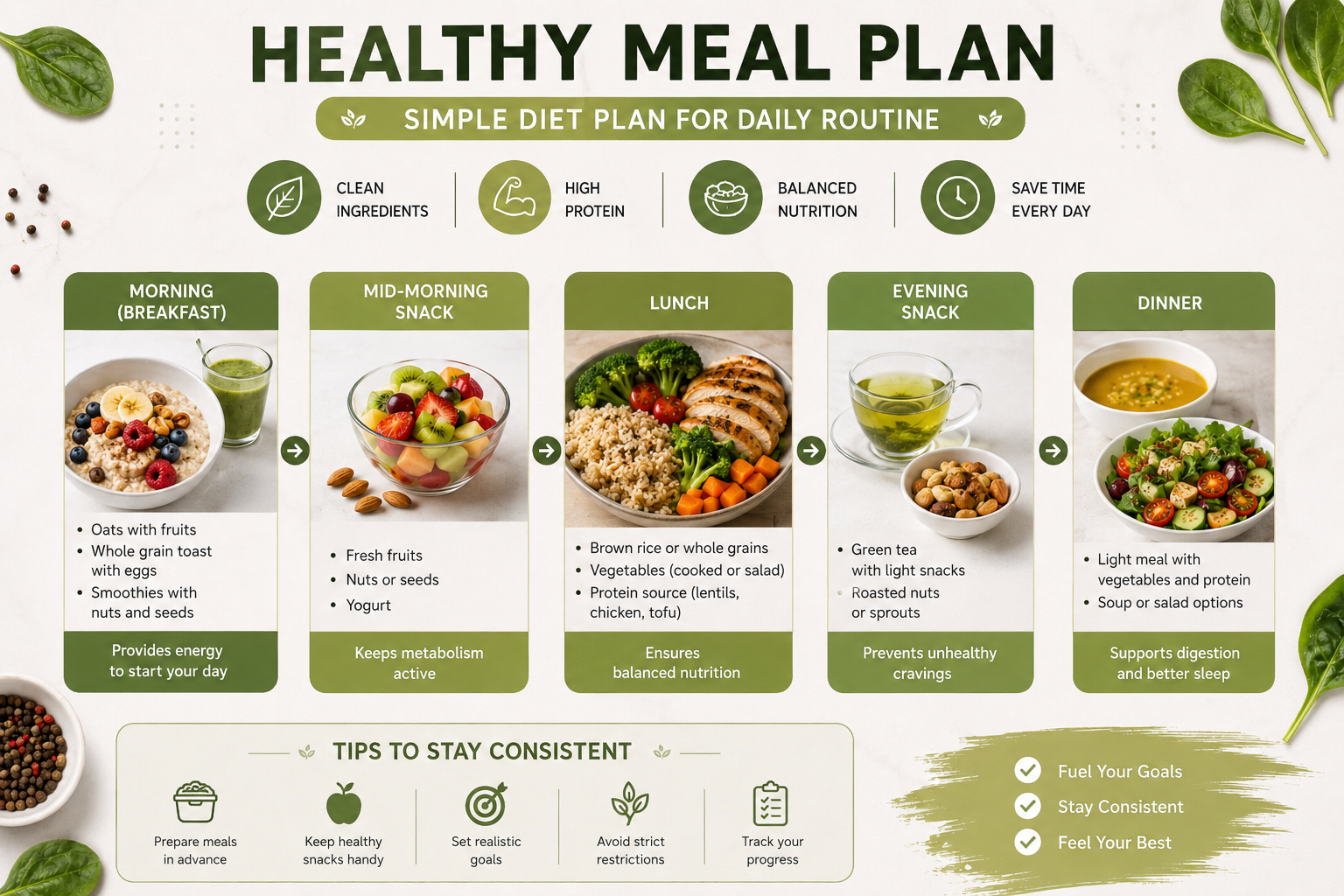
Morning (Breakfast)
- Oats with fruits
- Whole grain toast with eggs
- Smoothies with nuts and seeds
Provides energy to start your day
Mid-Morning Snack
- Fresh fruits
- Nuts or seeds
- Yogurt
Keeps metabolism active
Lunch
- Brown rice or whole grains
- Vegetables (cooked or salad)
- Protein source (lentils, chicken, tofu)
Ensures balanced nutrition
Evening Snack
- Green tea with light snacks
- Roasted nuts or sprouts
Prevents unhealthy cravings
Dinner
- Light meal with vegetables and protein
- Soup or salad options
Supports digestion and better sleep
How to Create Your Own Healthy Meal Plan
1. Focus on Whole Foods
Choose fresh fruits, vegetables, whole grains, and lean proteins.
2. Maintain Portion Control
Avoid overeating by balancing your plate.
3. Stay Hydrated
Drink enough water throughout the day.
4. Plan Weekly Meals
Prepare a weekly schedule to stay consistent.
5. Keep It Simple
A simple diet plan for daily routine is easier to follow than complex diets.
Common Mistakes to Avoid
Skipping Meals
Leads to overeating later in the day
Overcomplicating Diet Plans
Simple plans are more sustainable
Ignoring Nutritional Balance
Every meal should include essential nutrients
Tips to Stay Consistent
- Prepare meals in advance
- Keep healthy snacks handy
- Set realistic goals
- Avoid strict restrictions
- Track your progress
Conclusion
Understanding what healthy meal plans is the first step toward a healthier lifestyle. By following a simple diet plan for daily routine, you can build consistency, improve nutrition, and achieve long-term wellness.
Start small, stay consistent, and make healthy eating a part of your daily life.
FAQs
1.What are healthy meal plans?
Healthy meal plans are structured eating guides that include balanced nutrients to support overall health and wellness.
2. What is a simple diet plan for daily routine?
A simple diet plan for daily routine includes balanced meals throughout the day such as breakfast, lunch, snacks, and dinner using healthy ingredients.
3. Why are healthy meal plans important?
They ensure proper nutrition, improve energy levels, and help maintain a healthy lifestyle.
4. Can I follow a healthy meal plan every day?
Yes, healthy meal plans are designed for daily use and can be adjusted based on your needs and lifestyle.
5. How do I start a simple diet plan?
Start by including whole foods, maintaining portion control, and planning meals in advance.