
Introduction
Spending most of the day sitting at a desk can make healthy eating surprisingly difficult. Long meetings, deadlines, screen time, skipped breaks, and easy access to snacks can all affect your eating habits.
For people who work at a desk, nutrition isn’t about following a complicated diet. It’s about choosing meals that provide protein, fiber, whole-food carbohydrates, healthy fats, vitamins, and minerals while keeping portions appropriate for your individual needs.
A nutritious breakfast, balanced office lunch, smart snacks, and adequate hydration can make it easier to maintain energy and healthy eating habits throughout a long workday.
What to Eat Before a Long Workday
Starting your workday with a balanced meal can help you avoid becoming extremely hungry later.
Choose Protein
Include foods such as:
- Greek yogurt
- Eggs
- Cottage cheese
- Tofu
- Beans
- Lentils
Protein can help make meals more satisfying and contributes to maintaining muscle.
Add Fiber-Rich Carbohydrates
Oats, whole-grain toast, fruit, and other whole grains provide carbohydrates along with fiber and other nutrients.
Include Healthy Fats
Nuts, seeds, avocado, or a small amount of nut butter can add healthy fats and flavor.
Example breakfast:
Oatmeal with Greek yogurt, berries, chia seeds, and a few nuts.
Healthy Office Lunch Ideas
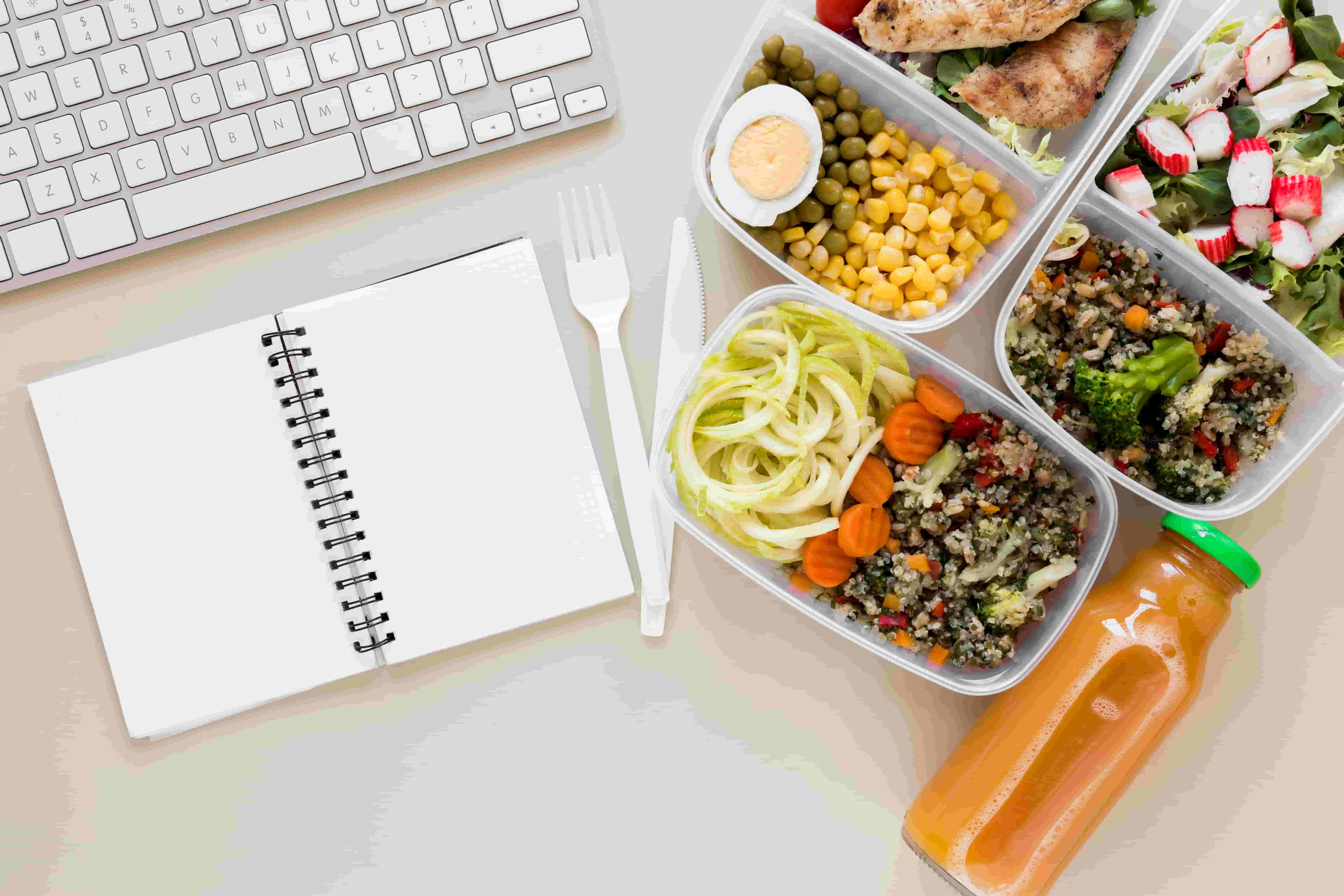
Your lunch doesn’t need to be complicated. Aim for a combination of protein + vegetables + fiber-rich carbohydrates + healthy fats.
1. Chicken and Grain Bowl
Combine grilled chicken, brown rice or quinoa, mixed vegetables, and a light dressing.
2. Lentil and Vegetable Bowl
Lentils with vegetables, whole grains, and yogurt make a satisfying vegetarian lunch.
3. Tofu Stir-Fry
Combine tofu with broccoli, peppers, mushrooms, and other vegetables. Add brown rice or another whole grain.
4. Fish and Salad
Pair grilled fish with a large vegetable salad and a portion of potatoes or whole grains.
5. Chickpea Wrap
Use a whole-grain wrap filled with chickpeas, vegetables, hummus, and leafy greens.
These meals can be prepared in advance and packed for work.
Nutrition Tips for People Who Sit All Day
Don’t Let Sitting Determine Your Meal Quality
Working at a desk doesn’t mean you need to drastically restrict food. Your nutritional needs depend on factors such as body size, activity level, age, health status, and goals.
Focus on food quality and appropriate portions rather than simply eating as little as possible.
Keep Healthy Snacks Nearby
Long gaps between meals can make highly processed snacks especially tempting.
Keep convenient options available, such as:
- Fruit
- Greek yogurt
- Nuts
- Roasted chickpeas
- Hummus and vegetables
- Whole-grain crackers
- Seeds
Stay Hydrated
Keep water nearby and drink regularly throughout the day. Your fluid needs vary depending on factors such as activity, climate, and overall diet.
If you spend hours in meetings, keeping a reusable water bottle at your desk can make hydration easier.
Take Movement Breaks
Nutrition and movement work together as part of a healthy lifestyle.
If your job involves prolonged sitting, try incorporating short movement breaks:
- Walk during a phone call.
- Stand up between meetings.
- Take a short walk during lunch.
- Stretch periodically.
- Use stairs when practical.
These small actions can help break up long periods of sitting.
What to Eat During a Long Workday
A simple workday structure could look like:
Breakfast: Oats + Greek yogurt + berries + nuts
Mid-morning: Fruit or yogurt
Lunch: Chicken/tofu/lentils + whole grains + vegetables
Afternoon: Roasted chickpeas or nuts + fruit
Dinner: Fish/paneer/beans + vegetables + whole grains
You don’t need to follow this exact structure. Adjust meal timing and portions according to your hunger, schedule, health needs, and goals.
Common Office Nutrition Mistakes
Avoid making these habits routine:
- Skipping lunch because of meetings
- Eating at your desk without paying attention to portions
- Relying on sugary drinks for energy
- Snacking continuously throughout the workday
- Eating very large meals after skipping earlier meals
- Choosing highly processed foods simply because they’re convenient
- Forgetting to drink water
Planning even one or two meals ahead can make a significant difference.
Make Healthy Office Eating More Convenient
Healthy eating becomes easier when nutritious options are available before you’re hungry.
Prepare lunch ingredients in advance, keep simple snacks at work, and plan meals around your schedule.
For particularly busy workdays, Mista Eats can also make nutritious eating more convenient by providing prepared meals when you don’t have the time to shop, cook, and portion food yourself.
Conclusion
A desk job doesn’t mean you have to sacrifice good nutrition.
Start your day with a balanced breakfast, choose a protein- and vegetable-rich lunch, keep nutritious snacks available, drink water regularly, and take opportunities to move throughout the day.
The goal isn’t a perfect office diet. It’s creating simple nutrition habits that work with your schedule and can be maintained over time.
FAQ’s
1. What is a healthy lunch for office workers?
A balanced office lunch can include a protein source, vegetables, a fiber-rich carbohydrate, and a small amount of healthy fat. Examples include grain bowls, lentil bowls, wraps, and salads with protein.
2. What should I eat before a long workday?
Choose a balanced breakfast containing protein, fiber-rich carbohydrates, and healthy fats. Oats with Greek yogurt and berries or whole-grain toast with eggs and vegetables are practical options.
3. What are healthy snacks to keep at the office?
Fruit, nuts, Greek yogurt, roasted chickpeas, seeds, hummus, and whole-grain crackers are convenient choices.
4. How can I eat healthy while sitting all day?
Focus on balanced meals, appropriate portions, regular hydration, nutritious snacks, and movement breaks throughout the workday.
5. Is it okay to eat lunch at my desk?
Occasionally, yes. However, taking a proper break and eating mindfully can make it easier to notice hunger and fullness cues and avoid distracted eating.